I have a big pine tree in my backyard. And a couple of small, ornamental crabapples. None of them belongs there. The pine, in fact, is sick and miserable. They're all products of the Big Lie.
As I learned from a botanist friend awhile back, the wooded land where I live was once open grassland sparsely dotted with trees. Then the farmers and townspeople came, turning the grasslands upside down, and felling the trees to build houses and shops. And then, because the land was made so barren, they planted trees. Thousands of trees, of countless species.
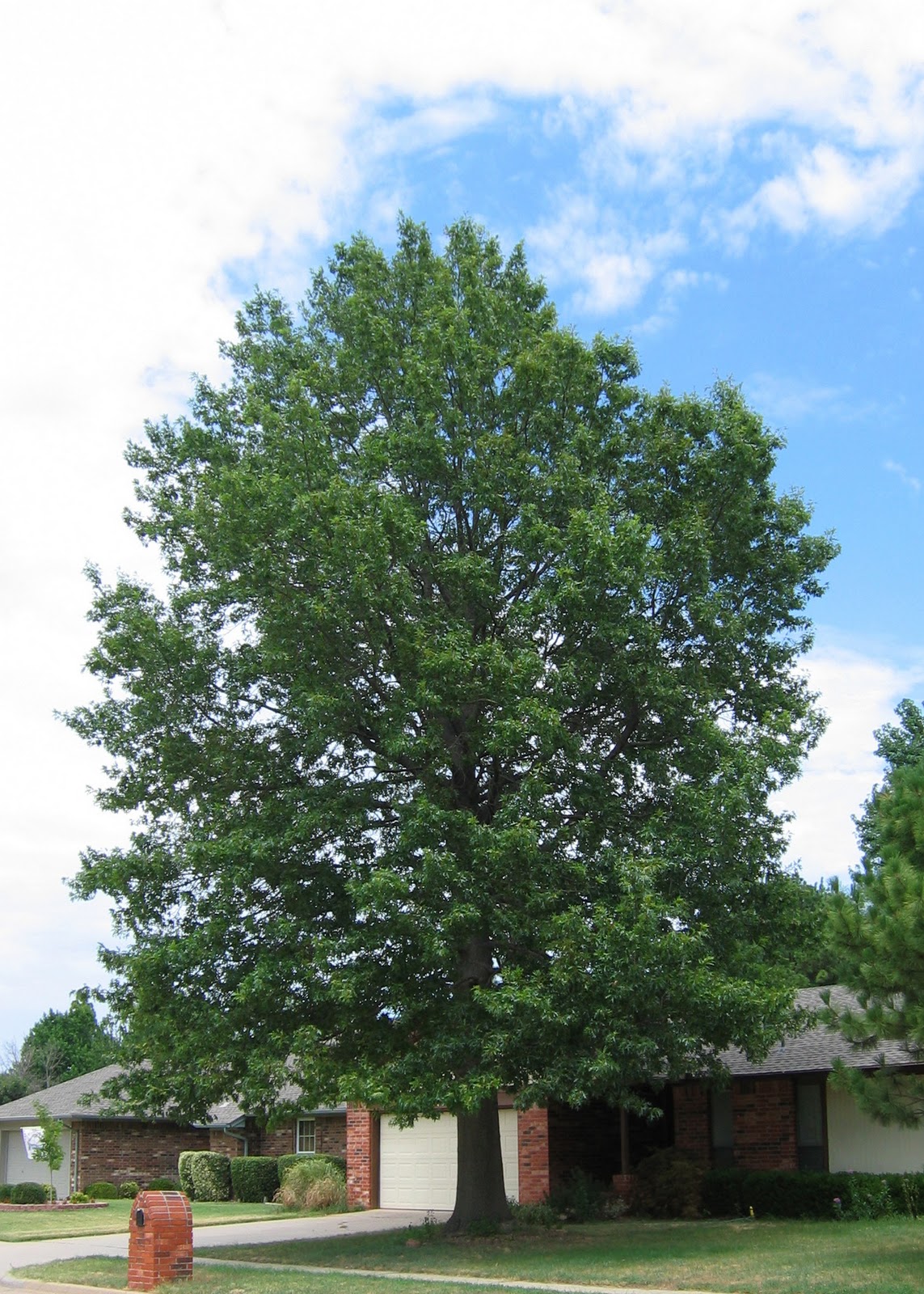
Strictly speaking, few of these transplants belong here.
Citizens of virtually every populated area of the country have worked hard at transforming Nature in some fashion. Water features and palm trees appear in desert neighborhoods. Trees by the millions are planted on the vast Great Plains. Wetlands are drained and replanted with species that don't like wet feet. Even the changes are changed, with pines and magnolias migrating to backyards that were once open prairie and then cultivated wheat fields before becoming housing developments.
And then, stinko weather happens.
A tree species grown in the same area where it originally evolved has adapted itself to the extreme-weather conditions common to its natural habitat. But species that come from elsewhere are, in effect, forced immigrants. They have no choice but to accept the Big Lie that says they can grow and thrive wherever we want them to.
Sometimes, it works. But more often than not, when extreme weather strikes, it is the non-native species that commonly suffer the most damage. The reasons are myriad. Perhaps they haven't developed strong branching habits better able to bear the weight of ice or high winds. Or they can't adapt to cyclic dry spells. Or their thin bark can't protect them from fast-moving wildfires.
So back when my friend told me about the open-grassland history of my property, I took myself straightaway to my local Conservation District office to find out more about this. There, I was given a local "Soil Survey," which contains aerial maps, an overview of development of the area, a rundown of soil types and plant communities...well, you get the picture: lots of important stuff about my tiny piece of the world. The friendly folks at the CD also gifted me with a copy of the "Ecological Site Description," which told me about the original state of my soil district.
(If you haven't visited your local Conservation District office, do so and report back here. To find the closest one, hop over to the USDA website at http://www.nrcs.usda.gov/ and click on "NRCS State Offices.")
Thanks to those two documents, I now know what trees and other plants grow naturally in my area. I know what my soil should be like, though development over the past century-plus has changed it. With an accurate awareness of the past, I can develop soil and planting strategies that can bring my landscape better in line with its ecological history, which will populate it with plants that are naturally more weatherproof.
After all, trees are remarkable works of Nature, evolved over thousands of years. Why wouldn't I want to take advantage of all that hard work by planting trees that are native to my locale?
Believe me, personal experience is the best teacher—and it taught me that the Big Lie will always come back to bite. Several years ago, we lost most of our "immigrant" trees to a catastrophic ice storm. Most native trees made it through the storm with survivable damage. Lesson learned
Discussions about protecting and rescuing valuable trees and shrubs in the face of extreme-weather events of all kinds—including wind, drought and wildfire, flood, frozen stuff (snow and ice), and lightning.
Monday, October 10, 2011
Sunday, October 9, 2011
SIGN UP!
If you haven't done so already, skip over to the column on the right and subscribe to Weatherproofing Your Landscape. Then you won't miss a single new post—or offerings such as the coupon contained in the Since You Asked interview with Stark Bro's Nurseries.
Friday, October 7, 2011
Since You Asked...Jud Scott
Welcome to the Friday Since You Asked feature! Because arborists are so vital before and after extreme-weather events strike your landscape, today we're shooting questions at Certified and Registered Consulting Arborist Jud Scott, working out of Carmel, Indiana.
While researching Weatherproofing Your Landscape: A Homeowner's Guide to Protecting and Rescuing Your Plants, I picked Jud's brain more times than a less generous man would have permitted. He isn't just knowledgeable about trees—he's passionate about them.
Q. Jud, how important is it to develop a working relationship with an arborist before disaster strikes your landscape?
A. A working relationship with an arborist is always a good idea—much like having a regular doctor who knows you and understands your problems.
For example, property inspection and annual care by an arborist can save you thousands of dollars in repairs if installing a support cable (for $150 to $200) can keep a tree from falling on your house. Or the removal of a tree that is decayed can be done when it is noticed during a regular inspection, instead of in the middle of the night at emergency storm rates.
Finally, and maybe most important, in the event of a real serious storm, regular clients get taken care of first. If you don't have a relationship with an arborist, you may have to wait.
Q. Arborists tend to have their hands full during and after an extreme-weather event. How long can a damaged tree wait to be repaired?
A. Unstable trees should not wait, but stable trees can often wait until "after the storm," or even until winter. Each case will differ according to the need. Sometimes the tree will be just plain ugly after a section splits out, and you may not want to wait. Sometimes we will say, "Let's get this off the house, and then we will come back for the rest after the storm."
Q. What can an arborist do for last summer's drought and flood-ravaged trees and shrubs?
A. The best thing you could have done for drought-ravaged trees was water them—one inch or more per week. Next best thing is to water them now until the snow flies.
Trees damaged by construction present other problems during droughts. Most people don't know that roots are only 2 to 3 feet below grade, so cutting roots for construction leaves them prone to drought damage. The best care is preventive pre-construction planning with an arborist who understands construction, trees and preservation. Often you need to give trees that were near construction areas extra water in drought times.
As for flooded trees, they may be okay—trees sometimes can take standing in water for a while. This is an individual tree-to-tree diagnosis (thus the need for a working relationship with your arborist).
Q. This year has already produced the most natural disasters on record in the US in one calendar year...and we still have nearly three months to go. What is the most important piece of advice you can give to landscape owners whose trees and shrubs have suffered damage from extreme-weather events?
A. Realize that, before you call out a Consulting Arborist for an appraisal of damages, the Internal Revenue Service will allow deductions for "sudden unexpected or unusual events," which a storm event might be—but it will not accept "formulaic" appraisals like the Trunk Formula method. It is best to talk with your accountant, and maybe your attorney, before your arborist. It is also important to hire an arborist who has experience with this kind of work.
[Note: The subject of tax breaks and insurance deductions for landscape damage is covered in Weatherproofing Your Landscape: A Homeowner's Guide to Protecting and Rescuing Your Plants.]
Q. What's the difference between a Certified Arborist, a Registered Consulting arborist, and a tree-trimming service that employs neither of the above?
A. Certified Arborist or Board Certified Master Arborist are designations given by the International Society of Arboriculture http://www.isa.-arbor.com/. These designations are a sign that the person has a good working knowledge of arboriculture. The arborists will often use personal protective gear [PPGs], which is best for them and a good indication that they will take care of your property too.
A Registered Consulting Arborist [RCA] has passed the American Society of Consulting Arborists http://www.asca-consultants.org/ Academy, and written a series of rigorously graded papers. RCAs are the group you are looking for when you have a litigious situation, a tree preservation project, a neighbor dispute, or an insurance issue.
Another group to look for are Certified Treecare Safety Professionals from the Tree Care Industry Association http://www.treecareindustry.org/. If the company is a TCIA member and/or has Certified Treecare Safety Professionals on staff, this is a good sign they are progressive and will be safe to take care of your property.
Then there is the company that has none of these. My question would be, "Why not?" They may be good—they may not. I would ask a lot of questions of them, and definitely ask for a certificate of insurance from all.
While researching Weatherproofing Your Landscape: A Homeowner's Guide to Protecting and Rescuing Your Plants, I picked Jud's brain more times than a less generous man would have permitted. He isn't just knowledgeable about trees—he's passionate about them.
![]() |
| Courtesy Wabash College |
A. A working relationship with an arborist is always a good idea—much like having a regular doctor who knows you and understands your problems.
For example, property inspection and annual care by an arborist can save you thousands of dollars in repairs if installing a support cable (for $150 to $200) can keep a tree from falling on your house. Or the removal of a tree that is decayed can be done when it is noticed during a regular inspection, instead of in the middle of the night at emergency storm rates.
Finally, and maybe most important, in the event of a real serious storm, regular clients get taken care of first. If you don't have a relationship with an arborist, you may have to wait.
Q. Arborists tend to have their hands full during and after an extreme-weather event. How long can a damaged tree wait to be repaired?
A. Unstable trees should not wait, but stable trees can often wait until "after the storm," or even until winter. Each case will differ according to the need. Sometimes the tree will be just plain ugly after a section splits out, and you may not want to wait. Sometimes we will say, "Let's get this off the house, and then we will come back for the rest after the storm."
Q. What can an arborist do for last summer's drought and flood-ravaged trees and shrubs?
A. The best thing you could have done for drought-ravaged trees was water them—one inch or more per week. Next best thing is to water them now until the snow flies.
Trees damaged by construction present other problems during droughts. Most people don't know that roots are only 2 to 3 feet below grade, so cutting roots for construction leaves them prone to drought damage. The best care is preventive pre-construction planning with an arborist who understands construction, trees and preservation. Often you need to give trees that were near construction areas extra water in drought times.
As for flooded trees, they may be okay—trees sometimes can take standing in water for a while. This is an individual tree-to-tree diagnosis (thus the need for a working relationship with your arborist).
Q. This year has already produced the most natural disasters on record in the US in one calendar year...and we still have nearly three months to go. What is the most important piece of advice you can give to landscape owners whose trees and shrubs have suffered damage from extreme-weather events?
A. Realize that, before you call out a Consulting Arborist for an appraisal of damages, the Internal Revenue Service will allow deductions for "sudden unexpected or unusual events," which a storm event might be—but it will not accept "formulaic" appraisals like the Trunk Formula method. It is best to talk with your accountant, and maybe your attorney, before your arborist. It is also important to hire an arborist who has experience with this kind of work.
[Note: The subject of tax breaks and insurance deductions for landscape damage is covered in Weatherproofing Your Landscape: A Homeowner's Guide to Protecting and Rescuing Your Plants.]
Q. What's the difference between a Certified Arborist, a Registered Consulting arborist, and a tree-trimming service that employs neither of the above?
A. Certified Arborist or Board Certified Master Arborist are designations given by the International Society of Arboriculture http://www.isa.-arbor.com/. These designations are a sign that the person has a good working knowledge of arboriculture. The arborists will often use personal protective gear [PPGs], which is best for them and a good indication that they will take care of your property too.
A Registered Consulting Arborist [RCA] has passed the American Society of Consulting Arborists http://www.asca-consultants.org/ Academy, and written a series of rigorously graded papers. RCAs are the group you are looking for when you have a litigious situation, a tree preservation project, a neighbor dispute, or an insurance issue.
Another group to look for are Certified Treecare Safety Professionals from the Tree Care Industry Association http://www.treecareindustry.org/. If the company is a TCIA member and/or has Certified Treecare Safety Professionals on staff, this is a good sign they are progressive and will be safe to take care of your property.
Then there is the company that has none of these. My question would be, "Why not?" They may be good—they may not. I would ask a lot of questions of them, and definitely ask for a certificate of insurance from all.
Monday, October 3, 2011
Serial Killers in Your Landscape
Extreme weather has hammered landscapes around the country—and around the world—this year. Depending on where you live, if your trees and shrubs weren't being parched by record-smashing heatwaves and exception drought conditions, they were being waterlogged or iced over. Throw in destructive high winds, hailstorms, tornadoes, and...well, you get the picture.
Even if your major landscape plants made it through the growing season, they probably didn't do so unscathed. Trees and shrubs subjected to serious drought and long-term flooding nearly always incur some degree of root loss. Or perhaps they lost limbs, or were defoliated, by other extreme-weather events.
Whatever "ill winds" your valuable landscape plants have suffered, they are now in mortal danger of succumbing to subsequent "serial" assaults while still in their weakened condition.
Roots take time to regenerate. Wounds from lost limbs or other injuries take time to callus over. This recuperative period can last up to five years, during which a plant pours all the energy it can into recovering from its injuries. If it hasn't had time to restore itself before being hit by one or more additional extreme-weather events, this year's injuries could result in its death this winter, next year or even several years later.
[Note: Weatherproofing Your Landscape: A Homeowner's Guide to Protecting and Rescuing Your Plants, provides guidelines on repairing damage, as well as how to manage long-term post-damage care.]
I have trees that were severely damaged by a catastrophic ice storm in 2007. They've been in particular danger this past year during our record-setting heatwave and exceptional drought. So has a big oak tree that lost a substantial part of its root system during a construction project a year of so ago. For years to come, I'm going to be on pins and needles each spring, waiting to see if these specimens have the energy to leaf out.
But there are things you can do to help make sure your stressed landscape specimens have the best possible chance to recover. (And whatever measures you take now could save you the work and expense of replacing dead specimens later.)
Where serious root loss is concerned: our big root-damaged oak was treated with a growth retardant that reduced its top growth while its roots regenerate. [See the Surviving Dead Roots posting—9/9/11.] This might help your drought or flood-stressed tree as well. (Consult a certified arborist.)
Deep-soaking the root system is essential in drought-stricken landscapes. Last month, I dug a hole in a frequently watered border bed, to plant a new shrub. The drought was so extreme that, once I got down about a foot, the moist soil turned brick-dry. So in extreme, prolonged droughts, even digging down several inches to check soil moisture doesn't always tell you what's going on deeper still. I've found that deep soaking with a drip hose...then deep soaking again a few days later while the soil is still moist...gets moisture down to the deepest feeder roots (which can be up to 20 inches below the surface).
Deep-soaking stressed specimens now and throughout winter (when the ground isn't frozen) is essential. Soil moisture helps insulate plants against winter cold.
If too much water is the chronic problem, you might want to consult a landscape architect to advise you on how to improve drainage without doing more damage than good. For instance, raising the soil level around plants, or trenching French drains within their critical root zones, are major no-nos!
So keep in mind that a stressed plant is highly vulnerable to future stressors that occur before it has had time to recover. Do not fertilize stressed trees during their recuperative period. And check with an arborist or your cooperative extension agent if you feel that your specimen might be diseased or infested. (Stressed plants are magnets for bugs and diseases.)
We're curious: What kinds of special problems have extreme-weather events caused for your landscape plants?
![]() |
| National Oceanic & Atmospheric Administration/ Department of Commerce |
Whatever "ill winds" your valuable landscape plants have suffered, they are now in mortal danger of succumbing to subsequent "serial" assaults while still in their weakened condition.
Roots take time to regenerate. Wounds from lost limbs or other injuries take time to callus over. This recuperative period can last up to five years, during which a plant pours all the energy it can into recovering from its injuries. If it hasn't had time to restore itself before being hit by one or more additional extreme-weather events, this year's injuries could result in its death this winter, next year or even several years later.
[Note: Weatherproofing Your Landscape: A Homeowner's Guide to Protecting and Rescuing Your Plants, provides guidelines on repairing damage, as well as how to manage long-term post-damage care.]
![]() |
| National Oceanic & Atmospheric Administration/ Department of Commerce |
But there are things you can do to help make sure your stressed landscape specimens have the best possible chance to recover. (And whatever measures you take now could save you the work and expense of replacing dead specimens later.)
Where serious root loss is concerned: our big root-damaged oak was treated with a growth retardant that reduced its top growth while its roots regenerate. [See the Surviving Dead Roots posting—9/9/11.] This might help your drought or flood-stressed tree as well. (Consult a certified arborist.)
Deep-soaking the root system is essential in drought-stricken landscapes. Last month, I dug a hole in a frequently watered border bed, to plant a new shrub. The drought was so extreme that, once I got down about a foot, the moist soil turned brick-dry. So in extreme, prolonged droughts, even digging down several inches to check soil moisture doesn't always tell you what's going on deeper still. I've found that deep soaking with a drip hose...then deep soaking again a few days later while the soil is still moist...gets moisture down to the deepest feeder roots (which can be up to 20 inches below the surface).
Deep-soaking stressed specimens now and throughout winter (when the ground isn't frozen) is essential. Soil moisture helps insulate plants against winter cold.
If too much water is the chronic problem, you might want to consult a landscape architect to advise you on how to improve drainage without doing more damage than good. For instance, raising the soil level around plants, or trenching French drains within their critical root zones, are major no-nos!
So keep in mind that a stressed plant is highly vulnerable to future stressors that occur before it has had time to recover. Do not fertilize stressed trees during their recuperative period. And check with an arborist or your cooperative extension agent if you feel that your specimen might be diseased or infested. (Stressed plants are magnets for bugs and diseases.)
We're curious: What kinds of special problems have extreme-weather events caused for your landscape plants?
Friday, September 30, 2011
Since You Asked...Stark Bro's
This is fall tree-planting season...and all those mail-order ads that crop up at this time of year can be mighty tempting. But it's easy to get burned when purchasing sight-unseen nursery stock. Also, mail-order stock is bare-root, which requires special consideration. So Meg Cloud at Stark Bro's Nurseries & Orchard Co. has graciously offered helpful advice.
And as a special thank you to our blog readers, Stark Bro's is making the nifty coupon offer at the bottom of today's posting!
Q. Meg, what should a potential customer look for in a mail-order nursery?
A company's reputation among the general public should be a good indicator of their other qualities and characteristics. With a little effort, a google search should result in websites, social sites, forums, and reviews on the nurseries under consideration.
Find out if the mail-order nursery primarily grows their own stock, or if they purchase from another grower just to resell it. Look for the extent of their expertise for your particular growing interest. Stark Bro's prides themselves on being experts in fruit trees, roses, and small fruits, whereas other nurseries may claim evergreens or vegetables as their area of mastery.
Also, do you know things [about the nursery] that are important to you: customer service? Price? Quality? It's my humble opinion that any reputable business should have excellent customer service with an understandable correlation between the quality and the price of their products. But everyone has different priorities.
Dealing with live plants is precarious by nature—but be aware that reputation and quality usually result in one-time planting, while lower prices from obscure nurseries may result in several replacements.
Q. What is the advantage of mail ordering as opposed to purchasing stock locally?
A. Most reputable mail-order nurseries will guarantee a true-to-name variety, whereas local (and some less reputable mail-order) nurseries may not have their resell stock correctly labeled. You can usually find a broader selection of varieties by mail order (particularly in specialized categories, such as fruit trees).
Typically, the warranties on mail-order stock are much better than with local purchases. In addition, local nurseries usually sell potted (higher cost) instead of bare-root (lower cost) stock, which affects your pocketbook.
Q. When choosing trees and shrubs from a mail-order nursery, what is important to know (besides your hardiness zone, and making sure the plant is tolerant of your local extreme weather)?
A. I would definitely recommend knowing the warranty or guarantee behind the nursery stock. Some mail-order nurseries have limitations (such as time or circumstances) on their warranties. Stark Bro's [for instance], has a comprehensive guarantee on all of their trees and plants for up to a year, with a free replacement or purchase-price refund if a customer is for any reason dissatisfied with the product.
Also, know whether the trees/shrubs in question are disease-resistant. A tree is usually labeled "disease resistant" if it has a certain amount of hardiness against typical weather-related fungal or bacterial diseases.
Consider the mature height of the stock in question: will you be able to handle its proper care at that size? Larger stock may end up subject to injury or other issues that cannot be easily handled.
[Note: Weatherproofing Your Landscape: A Homeowner's Guide to Protecting and Rescuing Your Plants, provides guidance on selecting weather-resistant species.]
Q. What kinds of preparations should the customer make in anticipation of their ordered stock?
A. Know the soil, light and drainage requirements of the plants to be ordered. Have the planting site marked out, with consideration to the mature sizes of each tree or shrub.
If you have a planting area with poor drainage, be prepared to amend your soil before or at the time of planting. [Note: If you aren't sure how to do this, consult your local Cooperative Extension office.]
Prepare to plant your bare root stock as soon as possible following its arrival. Start Bro's recommends planting right away, but certainly within a week of shipment.
If you'll need to store the bare roots for a time, have a dark, damp place available with minimum light (a shed or garage would be suitable). Keep the bare roots covered in damp newspaper or cloth until you are able to plant. The goal is to keep these trees and shrubs dormant—which limits the transplant shock and any potential weather damage that would normally hurt a leafy green plant.
To get a head start, you could dig your planting holes the day before the anticipated arrival of your stock.
Q. Finally, what is the biggest mistake customers can make when receiving/planting bare-root stock?
A. The biggest mistake would probably be waiting too late to plant. If proper care isn't taken, the roots will dry out and become brittle. This is almost certain death for a bare-root tree. Should you notice the roots drying out, Stark Bro's recommends soaking the root ball in a bucket of water 6 to 8 hours before planting.
And as a special thank you to our blog readers, Stark Bro's is making the nifty coupon offer at the bottom of today's posting!
Q. Meg, what should a potential customer look for in a mail-order nursery?
A company's reputation among the general public should be a good indicator of their other qualities and characteristics. With a little effort, a google search should result in websites, social sites, forums, and reviews on the nurseries under consideration.
Find out if the mail-order nursery primarily grows their own stock, or if they purchase from another grower just to resell it. Look for the extent of their expertise for your particular growing interest. Stark Bro's prides themselves on being experts in fruit trees, roses, and small fruits, whereas other nurseries may claim evergreens or vegetables as their area of mastery.
Also, do you know things [about the nursery] that are important to you: customer service? Price? Quality? It's my humble opinion that any reputable business should have excellent customer service with an understandable correlation between the quality and the price of their products. But everyone has different priorities.
Dealing with live plants is precarious by nature—but be aware that reputation and quality usually result in one-time planting, while lower prices from obscure nurseries may result in several replacements.
Q. What is the advantage of mail ordering as opposed to purchasing stock locally?
A. Most reputable mail-order nurseries will guarantee a true-to-name variety, whereas local (and some less reputable mail-order) nurseries may not have their resell stock correctly labeled. You can usually find a broader selection of varieties by mail order (particularly in specialized categories, such as fruit trees).
Typically, the warranties on mail-order stock are much better than with local purchases. In addition, local nurseries usually sell potted (higher cost) instead of bare-root (lower cost) stock, which affects your pocketbook.
Q. When choosing trees and shrubs from a mail-order nursery, what is important to know (besides your hardiness zone, and making sure the plant is tolerant of your local extreme weather)?
A. I would definitely recommend knowing the warranty or guarantee behind the nursery stock. Some mail-order nurseries have limitations (such as time or circumstances) on their warranties. Stark Bro's [for instance], has a comprehensive guarantee on all of their trees and plants for up to a year, with a free replacement or purchase-price refund if a customer is for any reason dissatisfied with the product.
Also, know whether the trees/shrubs in question are disease-resistant. A tree is usually labeled "disease resistant" if it has a certain amount of hardiness against typical weather-related fungal or bacterial diseases.
Consider the mature height of the stock in question: will you be able to handle its proper care at that size? Larger stock may end up subject to injury or other issues that cannot be easily handled.
[Note: Weatherproofing Your Landscape: A Homeowner's Guide to Protecting and Rescuing Your Plants, provides guidance on selecting weather-resistant species.]
Q. What kinds of preparations should the customer make in anticipation of their ordered stock?
A. Know the soil, light and drainage requirements of the plants to be ordered. Have the planting site marked out, with consideration to the mature sizes of each tree or shrub.
If you have a planting area with poor drainage, be prepared to amend your soil before or at the time of planting. [Note: If you aren't sure how to do this, consult your local Cooperative Extension office.]
Prepare to plant your bare root stock as soon as possible following its arrival. Start Bro's recommends planting right away, but certainly within a week of shipment.
If you'll need to store the bare roots for a time, have a dark, damp place available with minimum light (a shed or garage would be suitable). Keep the bare roots covered in damp newspaper or cloth until you are able to plant. The goal is to keep these trees and shrubs dormant—which limits the transplant shock and any potential weather damage that would normally hurt a leafy green plant.
To get a head start, you could dig your planting holes the day before the anticipated arrival of your stock.
Q. Finally, what is the biggest mistake customers can make when receiving/planting bare-root stock?
A. The biggest mistake would probably be waiting too late to plant. If proper care isn't taken, the roots will dry out and become brittle. This is almost certain death for a bare-root tree. Should you notice the roots drying out, Stark Bro's recommends soaking the root ball in a bucket of water 6 to 8 hours before planting.
![]() |
| Here's the fine print: 1 coupon per customer; must be used online at http://www.starkbros.com/; code must be entered as a COUPON, not a promotion; expires Nov.30, 2011; good for $5 off orders over $50. |
Wednesday, September 28, 2011
Defending an Urban Tree
When my friends—I'll call them Tree Lovers—bought a house on a corner lot, they also acquired a large tree that shouldered right up to a corner street light. Sadly, the power company informed them that up to half of the tree's canopy would have to go, because it was blocking too much light.
It was hard not to sigh mightily for that unfortunate tree.
Historically, large street-side trees have fared miserably when it comes to urban utilities. Such trees tend to get butchered by municipal tree-trimming crews out to clear overhead power lines. Or their roots get severed by trenching operations for buried utility lines, or sheered off during street-widening projects. So when it came to a choice between a tree and a light pole, one would just have expected the Tree Lovers' specimen to end up being the loser.
But then, one would not be accounting for our intrepid Tree Lovers.
They started off by questioning the inevitable...and found a ray of hope. They learned from city officials that if they could get the majority of their neighbors to sign a petition in favor of it, the streetlight would be removed. Petition in hand, the knocking on doors commenced.
Matter of fact, the majority of the neighbors didn't want the streetlight removed. "But," according to Mrs. TL, "they also admired the tree and hated to see it chopped up." (Also, let it be said that none of the neighbors wanted a streetlight on their own property, which was an option.)
To my surprise—but perhaps not to theirs—the Tree Lovers succeeded: everyone they asked signed the petition. The tree that had stood on their street corner for generations was spared gross disfigurement that would likely have resulted in its death. The streetlight pole came down without so much as a whimper.
But, of course, the threat to the tree hadn't ended—and never will. Besides the formidable difficulties of living in an urban setting, trees contend with regular assaults from the weather. In December 2007, a catastrophic ice storm damaged or brought down thousands of trees in this Tree City. Debris-collection trucks roamed the streets like death wagons during the Black Plague, picking up logs and branches.
The tree on the Tree Lovers' corner survived.
Last year, a severe drought set in, steadily deepening to the most extreme level of "exceptional." With the drought came the most brutal heat wave in state history.
The tree endured.
Last spring came a violent hailstorm, blowing through on winds of 60 to 90 mph. Roofs were stripped of shingles. Air conditioning units were torn off commercial buildings. Again, debris-collection trucks made their grim rounds.
By then, our Tree Lovers had moved to another state, but they hadn't forgotten their corner tree. When they heard about the latest storm, they couldn't help but wonder. So with some trepidation, I promised to swing by their house and check out how the tree had fared.
I know this sounds corny, but when that corner came into view, my heart swelled. There the big tree stood, battered and now seriously misshapen by its history, but still green and thriving. It shades the house that once sheltered my friends. And with luck and continued care, it might continue to stand tall for another generation or more.
It was hard not to sigh mightily for that unfortunate tree.
Historically, large street-side trees have fared miserably when it comes to urban utilities. Such trees tend to get butchered by municipal tree-trimming crews out to clear overhead power lines. Or their roots get severed by trenching operations for buried utility lines, or sheered off during street-widening projects. So when it came to a choice between a tree and a light pole, one would just have expected the Tree Lovers' specimen to end up being the loser.
But then, one would not be accounting for our intrepid Tree Lovers.
They started off by questioning the inevitable...and found a ray of hope. They learned from city officials that if they could get the majority of their neighbors to sign a petition in favor of it, the streetlight would be removed. Petition in hand, the knocking on doors commenced.
Matter of fact, the majority of the neighbors didn't want the streetlight removed. "But," according to Mrs. TL, "they also admired the tree and hated to see it chopped up." (Also, let it be said that none of the neighbors wanted a streetlight on their own property, which was an option.)
To my surprise—but perhaps not to theirs—the Tree Lovers succeeded: everyone they asked signed the petition. The tree that had stood on their street corner for generations was spared gross disfigurement that would likely have resulted in its death. The streetlight pole came down without so much as a whimper.
But, of course, the threat to the tree hadn't ended—and never will. Besides the formidable difficulties of living in an urban setting, trees contend with regular assaults from the weather. In December 2007, a catastrophic ice storm damaged or brought down thousands of trees in this Tree City. Debris-collection trucks roamed the streets like death wagons during the Black Plague, picking up logs and branches.
The tree on the Tree Lovers' corner survived.
Last year, a severe drought set in, steadily deepening to the most extreme level of "exceptional." With the drought came the most brutal heat wave in state history.
The tree endured.
Last spring came a violent hailstorm, blowing through on winds of 60 to 90 mph. Roofs were stripped of shingles. Air conditioning units were torn off commercial buildings. Again, debris-collection trucks made their grim rounds.
By then, our Tree Lovers had moved to another state, but they hadn't forgotten their corner tree. When they heard about the latest storm, they couldn't help but wonder. So with some trepidation, I promised to swing by their house and check out how the tree had fared.
I know this sounds corny, but when that corner came into view, my heart swelled. There the big tree stood, battered and now seriously misshapen by its history, but still green and thriving. It shades the house that once sheltered my friends. And with luck and continued care, it might continue to stand tall for another generation or more.
A mature urban tree is a miracle of existence. While filtering pollutants from the air we breathe, it struggles with obstructed roots, blasting heat from man-made surfaces, and countless other daily insults. But it still provides habitat for urban wildlife, and enriches the visual texture of our lives.
Thus, the loss of the tree on the Tree Lovers' corner would have left a big chunk of empty sky. As all tree lovers know (or should know), sometimes a tree depends on you to fight for its right just to be.
Monday, September 26, 2011
Dissing Cookie Cutter Trees
'Tis the season for fall tree planting. The question is: Are you going to choose the right species for your landscape? Or are you going to let your local big-box store choose for you?
Because really...nothing says "boring" like a cookie-cutter tree—one of those ubiquitous species sold at big-box nursery outlets. Often found plunked down in the front yards of new housing developments, or planted in rows along driveways and streetsides, the widespread popularity of cookie-cutter trees can be attributed to one primary factor: they're cheap.
And let's face it: a cheap price is always such a temptation for impulse buyers. Especially when planting season is in the air, generating a powerful urge to make one's mark on the landscape.
But where extreme-weather events are concerned, if ever there was proof of the phrase, "you get what you pay for," cookie-cutter trees are it. Bradford pear trees are a prime example of a readily available, econo-priced plant that is almost always the first to be damaged or destroyed when extreme weather strikes.
That is not what I'm looking for in a landscape specimen that should be adding value to my property.
Okay...let me qualify all that. For many years, the downtown business district of my town was lined with Bradford pear trees. Overlooking the fact that you couldn't see the storefronts or signs through the dense lollipop crowns, the trees formed a glorious avenue of blossoms for a couple of weeks each spring. What a pleasure it was to walk or drive down the street amid a shower of snow-white petals.
But let's return to those crucial words highlight above: for many years. You notice I didn't say for many decades, or for generations. Those downtown trees are all gone now—and I can easily recall when they were planted. Cheap trees tend to have short natural lifespans, even without being damaged by extreme-weather events or other stressors. Though they sometimes live on well past an age when they should have been removed and replaced, it's usually in an increasingly ramshackle condition as property owners attempt to stave off the inevitable.
So when I'm shopping for a new addition to my landscape's tree or shrub population, I opt for long-lived species from lists provided by my county's cooperative extension office. These plants are best suited to my local climate and soil, which means they're more tolerant of the weather extremes that they're likely to encounter in my yard.
What's more, I rather fancy the idea of a tree that will outlive me, and go on doing its part to enrich my community's greater urban forest for many generations to come.
Today, I'm happy to say that I don't have a cookie-cutter tree on my property. I did have them in the past...but that's another story for later.
Because really...nothing says "boring" like a cookie-cutter tree—one of those ubiquitous species sold at big-box nursery outlets. Often found plunked down in the front yards of new housing developments, or planted in rows along driveways and streetsides, the widespread popularity of cookie-cutter trees can be attributed to one primary factor: they're cheap.
And let's face it: a cheap price is always such a temptation for impulse buyers. Especially when planting season is in the air, generating a powerful urge to make one's mark on the landscape.
But where extreme-weather events are concerned, if ever there was proof of the phrase, "you get what you pay for," cookie-cutter trees are it. Bradford pear trees are a prime example of a readily available, econo-priced plant that is almost always the first to be damaged or destroyed when extreme weather strikes.
That is not what I'm looking for in a landscape specimen that should be adding value to my property.
Okay...let me qualify all that. For many years, the downtown business district of my town was lined with Bradford pear trees. Overlooking the fact that you couldn't see the storefronts or signs through the dense lollipop crowns, the trees formed a glorious avenue of blossoms for a couple of weeks each spring. What a pleasure it was to walk or drive down the street amid a shower of snow-white petals.
But let's return to those crucial words highlight above: for many years. You notice I didn't say for many decades, or for generations. Those downtown trees are all gone now—and I can easily recall when they were planted. Cheap trees tend to have short natural lifespans, even without being damaged by extreme-weather events or other stressors. Though they sometimes live on well past an age when they should have been removed and replaced, it's usually in an increasingly ramshackle condition as property owners attempt to stave off the inevitable.
So when I'm shopping for a new addition to my landscape's tree or shrub population, I opt for long-lived species from lists provided by my county's cooperative extension office. These plants are best suited to my local climate and soil, which means they're more tolerant of the weather extremes that they're likely to encounter in my yard.
What's more, I rather fancy the idea of a tree that will outlive me, and go on doing its part to enrich my community's greater urban forest for many generations to come.
Today, I'm happy to say that I don't have a cookie-cutter tree on my property. I did have them in the past...but that's another story for later.
Subscribe to:
Posts (Atom)


